Wednesday, July 5, 2017

Best Love Story Ever

This week marks my 40th wedding anniversary, so for this post, I googled the greatest love stories of all time. Guess what stories appear in the "Top 3" of most lists? Romeo and Juliet, Anna Karenina, and Wuthering Heights. Some lists also include Gone with the Wind and Casablanca.

     Note any trends? What is it that draws us to stories where love is unrequited or the couple is doomed?

     One theory is it’s because human beings yearn to find love and to glory in its fledgling state—and we long for stories of others with whom we can identify. Yet, the best literature is built on conflict and tension. The top-rated stories certainly have that. 

     What of Pride and Prejudice, you may ask. Sure enough, that novel also appears on virtually every internet list for the greatest love stories of all time. It's got conflict, no doubt, but noting how the would-be lovers end up happily engaged, it’s a wonder the story isn’t categorized with Cinderella instead. Perhaps the key difference between the fairytale and Jane Austen’s classic is that Darcy doesn’t just swoop in and save Elizabeth. Rather, the female protagonist’s feelings and intellect are central to her and Darcy uniting.

     For a literary, modern retelling of the Austen classic with a happy ending, I recommend Eligible. I was impressed by author Curtis Sittenfeld’s reinterpretation for today’s readers (and not only because the bulk of the story is set in Cincinnati, city of my birth, nor how I “occasionally” have the guilty pleasure of watching The Bachelor on TV in hopes of seeing someone fall in love).

     Novels that alternate between the past and present are good for those who crave tales of undying love, where even several centuries do not stop two lovers from being together. There's the beloved Outlander series, of course, but I also offer up a 1972 book that spent six months on the New York Times Best Seller list: Green Darkness. 

     Now, my own love story has survived for four decades . . . but given the literature that's also stood the test of time, mine may not be the stuff of legend. My husband and I haven't met with a tragic separation or found each other in the 1600s. Still, I’m often asked how we've enjoyed such happiness and longevity. Brace yourself. The irony is, it’s not all about love. We actually like each other, too. It’s about shared family values and practical give-and-take and a pride in having come so far as people and as a couple since the day we said “I do.”

      Over the years, we've taken pleasure together in viewing the tragic love stories on the big screen, from Titanic to the more recent box office smash, Wonder Woman. At the theater, it’s hard to beat a good lump in the throat, shared with the person you love.
To receive notifications of my blog posts, visit any page in the blog while you're not on a mobile device. Enter your email address in the Subscribe box.

Tuesday, June 27, 2017

On the Storied Campus of Yale University

I’ve loved traveling to historical places for vacation ever since my dad let me choose Jamestown, Virginia over Disneyland when I was 10. This year, I got a bonus: I combined my love of history and my love of books by attending a summer writers’ conference at Yale University. There I learned from some of today’s most celebrated novelists—and I got to wander the shaded greens and hallowed buildings of one of our country’s oldest institutions.
     Author Chris Bohjalian’s master class was certainly a highlight. I’ve read several of his 19 books, and perhaps my favorite is his historical novel, Skeletons at the Feast. The story centers on 18-year-old Anna, the daughter of Prussian aristocrats, toward the end of WWII. Anna and others flee from Eastern Europe as Russian soldiers advance to Berlin. Bohjalian said, “I must invite readers into the story soon. And, when my books work best, they are about dread for readers.” Skeletons introduces a character we care about—as well as high tension—on page one, and there is a palpable sense that things will only get worse.
     Readers who enjoy lush, epic novels that shift between the past and the present should check out The Queen of the Night, by Alexander Chee, another instructor I had the honor of meeting. In Chee’s 2016 bestseller, Lilliet Berne is an opera singer in nineteenth-century Paris. Just when she thinks she may achieve her chance at immortality—a role that no other diva has ever performed—she discovers the composer’s material is based on her own life’s deepest secret. Of the four people who know about her hidden past, who will be the one to betray her? Chee’s goal with this book was to “grab the reader by the collar and not let them go.” He added, “To build a story, write with a chain of consequences. This happened because this happened because….” I loved the gritty protagonist in Chee’s novel, and I loved her twisting, turning story.
     Then there was author Lily King whose historical novel Euphoria captivated me. I only wonder why I waited to so long to pick it up. Inspired by the life of anthropologist Margaret Mead, the book is a masterwork of creating characters in conflict—conflict internal to themselves, and conflict that drives an unforgettable love triangle. About her writing, King said, “I don’t ‘think’ when I write. I’m more like a blind worm on the ground, feeling my way around. It’s not an intellectual process. Writers must be true to what’s inside; it wants to come out. Writers must listen.”
     My week was filled with other joys, too, everything from browsing 16th-century paintings at the Yale University Art Gallery to curling up in a leather love seat at Sterling Library (a breathtaking structure in the Gothic style) and studying fiction projects by the talented classmates from my small group workshop. We were led by Terra Elan McVoy, whose many novels have kept her young adult readers up late into the night to see how her ever-so-relatable stories end. Terra shared with us her insights from a lifetime of reading and studying craft. Because of her caring instruction, I left my summer vacation not only as a stronger reader, but as a woman filled with even more creative inspiration.

To receive notifications of my blog posts, visit any page in the blog while you're not on a mobile device. Enter your email address in the Subscribe box.

Monday, April 10, 2017

Calling All Audiobook Listeners


     Call me old-fashioned, but I rarely read books on Kindle. I like running my fingers across an embossed cover or up and down a deckled edge, and, as I’ve posted before, I jot notes throughout the chapters using my own key words and symbols.

     Yet, there is one exception to my old-fashionedness when it comes to reading novels: audiobooks.

     A dear friend recommended books on tape five years ago, and for me, there was no turning back. Oh, how much time I had wasted in a car! I commute to my job in the city for 50 minutes a day, each way. Now, I actually welcome traffic jams. (Okay, that might be a stretch.) But, true to what my friend had predicted, when I’m alone, I listen to snippets en route to the grocery, the gym, and the nail salon.

     Eventually, I graduated from shuffling 10-CD box sets to Amazon Audible. (Love. It.) While at a stoplight in rush hour, I can download a book from my wish list with one click on my iPhone and be “reading" a new story by the time my foot pushes the pedal.

     I find unexpected joy in listening to books being read to me. Perhaps it’s some subconscious throw-back to when I was a girl, to when my Memaw read me MADELINE. With audiobooks, a professional narrator often adds something that heightens my experience. This can be the varied character voices or a story interpretation—with the pauses, the cadence, the emphasis, the tone. The sounds of the words strung together by the author make music to my ears that my classic rock radio simply cannot.

     At times I have read a “real book” and listened to it, too (sometimes during the same period, other times years apart). The best of both worlds!

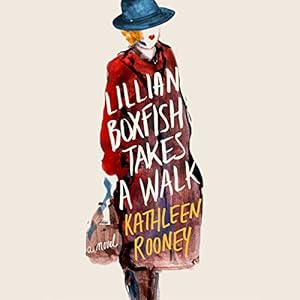
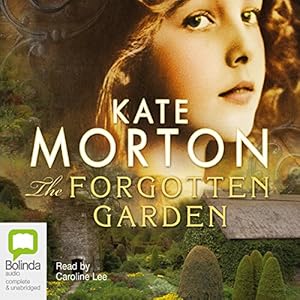
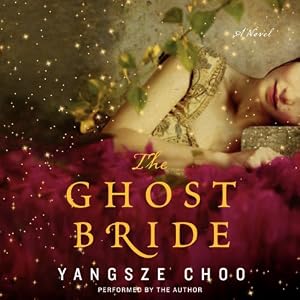
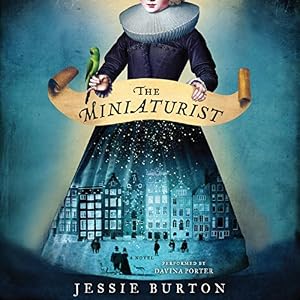
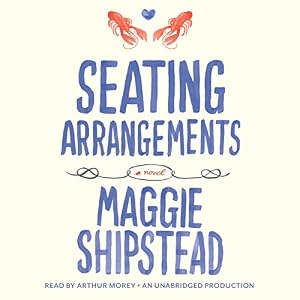
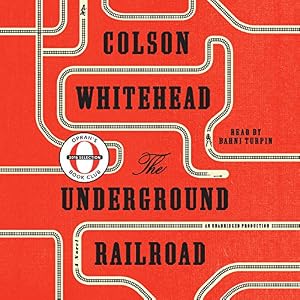
Here are two of my favorite audiobooks with stories that shift between the past and present:


Other awesome audiobooks you might enjoy:


You've heard of a TBR (To Be Read) List. Here are a couple of books I loved reading, and now they're on my "TBL" List. As in Yangsze Choo's audiobook above, the narrators for the books below are the authors!


What audiobooks are your favorites? 

Monday, April 3, 2017

True Confessions: I Crease the Spines of My Books

     Some people open a novel just far enough to read it. Heaven forbid they would ever bend back the wings of a hardcover book until the glue in the binding crunches. Nor would they ever permit deep vertical creases to mar the spines of paperbacks on their shelves. I get it. Books are works of art. To purists, bending back covers is akin to taking a Depression glass plate and purposely chipping off a shard from its rim.

     Warning to purists: when I read, I've been known to open a novel until it can lie flat on a table like a placemat. At minimum, I bend the cover back until I can comfortably hold it in one hand and read while in bed or while lounging by the pool. And no, I don’t fuss with bookmarks when dog-eared corners will do.

     I also write in my books. (Gasp.) I keep a mechanical pencil clipped to the top edge of a hardbound book’s jacket, so it’s handy when I need it. The edges of my trade paperback covers are frayed and cottony from fastening and unfastening my pencil for three hundred pages. I study the craft of writing fiction, so I underscore first lines that hooked me on page one. I mark lyrical sentences and beautiful sensory details. I note passages with tension and twists and character change.

     To me, the works of art that line my bookcases are keepsakes from where I’ve been. A book represents an interactive experience I’ve had—be it for learning or be it an escape—an experience that evokes memories like photos in an album I keep from a trip.

     Last weekend, I read—correction, I was enthralled by—Christina Baker Kline's A PIECE OF THE WORLD. 


Like her wildly popular ORPHAN TRAIN, her latest novel alternates between the past and the present. Blending fact and fiction, the book is about Christina Olson, the figure in a famous painting with a New England farmhouse and a field of gold. In the story, the main character is a friend of artist Andrew Wyeth and observes this about him:

All the things that most people fret about, Andy likes. The scratches made by the dog on the blue shed door. The cracks in the white teapot. The frayed lace curtains and the cobwebbed glass in the windows…. There’s more grandeur in the bleached bones of a storm-rubbed house, he declares, than in drab tidiness.
Aren’t the words of the last sentence true for a well-worn, well-loved, hard-read book?

     Purists might argue that books are meant to last beyond the life of the reader. I agree; that’s one of the things I love most about books. Yet, when I’m gone, no one will find first editions in mint condition for collectors, nor pristine tomes bearing the faint scent of old ink presses. They will find books that compare more to my Barbie from 1963, a doll with torn fingers from so much fun play—not a cold Barbie preserved in the original box that was bought from the store.

      They will find books that show a smudge of chocolate or drops of red wine on page 232. They will find smiley faces by paragraphs and know that in that moment, I laughed. They will see annotations such as “Oh!” by a scene that surprised me or “Tears!” where I cried.

      They will find books that were a part of my life and discover more about me.

Sunday, March 12, 2017

Weekly Tweets: The First 100 Books

     Today marks my Twitter-versary—my anniversary for 100 straight weeks of tweeting about novels that alternate between the past and present. Below you’ll find a "tapestry" of the first 100 books that I highlighted in my Sunday tweets. 

     This week also marks my first post at Past & Present Reads blog. Here to celebrate with me is fellow writer and blogger, MM Finck. She has been by-lined at Writer Unboxed and leads Women Writers, Women's Books’s Interviews. Thank you, MM, for stopping by to ask me the questions readers want to hear!

MM:
Tori, congratulations on your 100-week milestone! I’m glad to find in one handy spot all of the past-and-present books you’ve tweeted about so far. Have you actually read them all?
Tori:
Yes, though not in the order in which I tweeted about them. I read mostly in hardcover and trade paperback formats—and many through Audible (because listening to stories makes my long commute to work fun!).

MM:
What a wonderful variety of authors, periods, and themes are represented here. Have you repeated any authors in the first 100 tweets?
Tori:
No. Can you believe that? It suggests that other readers also enjoy books that shift between the past and present. That said, among the next 100 tweets, I will be excited to feature again some of my favorite authors—those such as Karen White and Beatriz Williams.    

                            (Interview continues below.)


MM:
Besides your love of history, what inspired you to be an enthusiast of novels that shift between the past and present?
Tori:
Many years after William Martin’s BACK BAY was published in 1979, I bought the novel and was enthralled. The story follows multiple generations of a Boston family and their connection to a lost silver tea service crafted by Paul Revere as a gift for George Washington. I later discovered many books with a similar structure, like early works by Sarah McCoy (THE BAKER’S DAUGHTER) and Jenna Blum (THOSE WHO SAVE US); both of these novels alternate between modern day and that of World War II—an era I find fascinating. I am intrigued by how past-and-present novels can take a glance back with the benefit of distance in assessing a time gone by. This holds true whether the novel spans 10 years, 70 years, or 300.

MM:
The tapestry of all 100 books is visually interesting. Can you possibly pick a favorite cover?
Tori:
Hmm, I distinctly recall when I first caught the buzz about A FINE IMITATION. I was unfamiliar with debut author Amber Brock at the time, but I knew instantly I had to read any book with that title and that cover. I was thrilled to learn Amber’s novel shifted between the past and present, and it turned out she also lives in the Atlanta-metro area. She’s one of many authors I’ve had the pleasure of meeting during events at FoxTale Book Shoppe.

MM:
Might we expect anything new with your weekly tweets in the future?
Tori:
Followers will find more book covers displayed in upcoming tweets. I might try a three-week series on a particular author’s past-and-present novels. I’m thinking maybe books by Susan Meissner and Kate Morton? And, I’ll be tweeting under a new hashtag now: #PastPresentReads.

MM:
Okay, ready for my toughest question, Tori? Which of the first 100 books was your best read?
Tori:
Ugh! That really is tough. If I was forced to drop everything this minute and start reading one again today, I’d probably pick up book #100. Besides its beautiful writing, THE LAST PAINTING OF SARA DE VOS blends so many of the things I'm drawn to in fiction . . . a historical period from centuries past (here, the 1600s); a second storyline, this one set in the 1950s; yet another narrative thread in the modern era—one that’s fueled by the memories and regrets of characters who have aged; the portrayal of women's roles over time; an underlying love story; and, of course, a compelling object or event that ties everything together: in this instance, a great piece of art.

MM:
Thank you, Tori! I look forward to seeing what books you feature next.
Tori:
Thank you, MM, for being my first blog guest!

     In closing, I have to say, I never anticipated my weekly tweets would carry on for nearly two years and running. I had already read 52 of these books before I began, and I thought I’d tweet each week for one year and be done. But, the more books I read, the more I found. I decided to keep going.

Please see my Sunday tweets @ToriLWhitaker. And, follow this blog for periodic reviews and other stuff for lovers of history and books.

NOTE ON THE TAPESTRY:  On Twitter, I inadvertently tweeted WEEK #36 twice, with two different books. Okay, I must have had a late night the Saturday before. LOL. (It’s amazing it only happened once!) Then, for WEEK #66, I happened to retweet librarian Sarah Johnson’s excellent blog post where she covered several past-and-present books. Her post could not be pictured in my tapestry above, so the 100 cover images ended up evening out. I encourage fans of historical fiction to follow Sarah’s beloved blog, Reading the Past.  

Today’s guest, MM Finck, is a writer, essayist, and offers query letter coaching and developmental editing as The Query Quill. She leads Women Writers, Women's Books’s Interviews and Agents’ Corner segments. She is the contest chair for the Women’s Fiction Writers Association Rising Star Writing Award. Her women’s fiction is represented by Katie Shea Boutillier of the Donald Maass Literary Agency. She is active on Facebook, Twitter, Goodreads, and Litsy (@MMF). http://www.mmfinck.com.